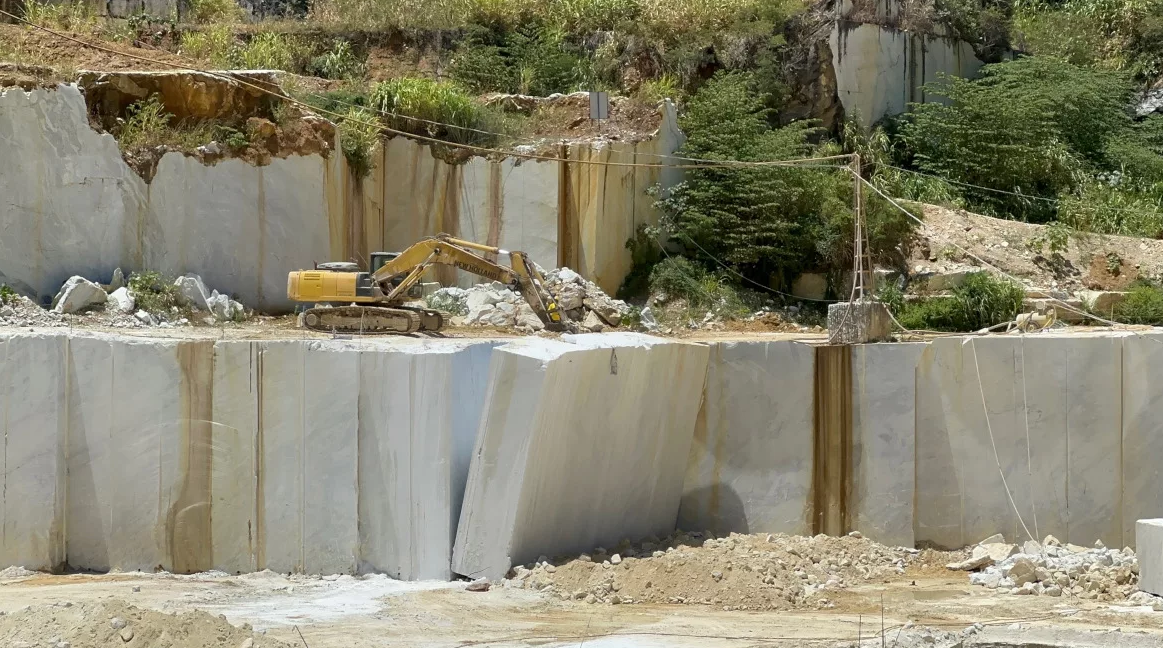
The customs classification covering quartzite, HTSUS subheading 6802.99.00, stayed on the exemption list. Quartzite is Brazil’s leading stone export to the U.S. market. Granite, marble and slate did not make the list.
A second and entirely separate Section 301 action landed two days later. That one covers 60 economies and targets countries the USTR determined have failed to impose or effectively enforce a ban on imports made with forced labor. Brazil drew the 12.5% rate, effective July 24.
“There is no exemption in this case,” said Cruz. “So right now, it’s 25 plus 12.5 for granites, marbles, slates, all those stones.”
The two duties stack on top of each other and on top of ordinary customs duties. Quartzite escapes the 25% but not the 12.5%.
Cruz said he would not attempt to detail the in-transit grace periods, which allowed goods already loaded and en route to clear at the old rates for a short window after each effective date. Those windows have closed.
“There’s so much information and misinformation going on, but right now it’s fully affected,” said Cruz.
The value-added argument
Centrorochas has been making its case in Washington through congressional offices, think tanks and the trade press, working alongside the Natural Stone Institute. The core of the argument is that Brazil ships a semi-finished product and the United States captures most of the value.
“Brazil exports mainly a semi-finished product to the U.S., which is slabs,” said Cruz. “So we are very integrated with the supply chain in the U.S. Our slabs are transported, are fabricated, are installed in the U.S., so the whole supply chain, there’s a lot more value added from the U.S. side than from the Brazil side.”
Cruz said he has been trying to bring U.S. consumers, importers and fabricators into the effort.
“At the end of the day, we are only one industry,” said Cruz. “Remember, we are a very fragmented industry. We can only do things together.”
He said he has been receiving help and support from American distributors and from the Natural Stone Institute, with people calling him in Brazil to ask what they can do and whether they should join him in Washington.
Getting involved
Asked where listeners should go to learn more or to help, Cruz said there is no single place to find it all, and directed them to contact him.
“Feel free to reach out to Centrorochas, to get in touch with me over social media or our website,” said Cruz. “Let’s talk about it. The more I can share, I can explain what is going on, we can exchange some of the pains that we’re going through, the better are the chances of us overcoming the challenges.”
He offered to schedule a video call with anyone who wants to walk through the details, or to talk it over in person at upcoming trade shows.
Cruz has spent a little over 26 years in the stone industry, much of it working with American distributors and fabricators.