Article
California Jury Awards $67.7 Million to Fabricator in Caesarstone Silicosis Case
Friday, November 6, 2026 from Stone World
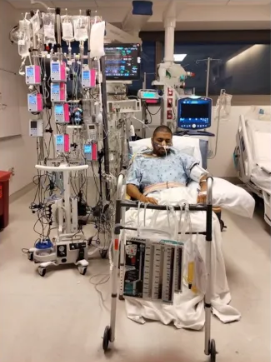
A Los Angeles County jury on Oct. 26 returned a $67.7 million verdict in favor of a countertop fabricator who developed silicosis and underwent a double-lung transplant, assigning 69.1% of the responsibility to Caesarstone Ltd. and Caesarstone USA Inc.
The verdict in the case of Dennys Rene Rivas Williams was announced by Brayton Purcell LLP, the Novato, California, law firm that represented him. The trial was held before Judge Michele Flurer in Long Beach. The case (No. 23STCV08523) is part of a coordinated proceeding of silicosis lawsuits in California state court, according to a Caesarstone filing with the U.S. Securities and Exchange Commission.
According to Brayton Purcell, the jury awarded $7.25 million in economic damages and $60 million in noneconomic damages. The firm’s $67.7 million total includes a stipulated amount of $466,000 that is to be added by the judge.
The jury apportioned 30% of the responsibility to Primus Marble, the Los Angeles fabrication shop where Rivas Williams worked, and a combined 0.9% to other stone slab manufacturers and suppliers.
In its SEC filing, Caesarstone put the jury’s award at approximately $67.3 million and its 69.1% share at approximately $46.5 million “if assessed without modification.” The company said it “is considering its available actions.”
Rivas Williams worked as a fabricator at Primus Marble from 2015 to 2022. He was diagnosed with silicosis in 2022 at age 35 and received a double-lung transplant in 2024 at age 37. According to Brayton Purcell, medical evidence indicates he is expected to need a second double-lung transplant in 2027.
Design defect finding
The jury found the Caesarstone entities liable under California’s strict products liability design defect risk-benefit test and rejected the companies’ defense that the injuries resulted from “highly unforeseeable” misuse of the product, according to the firm.
James P. Nevin, the Brayton Purcell partner who tried the case with associate Steven Patti, said Caesarstone’s attorneys repeatedly told the jury that the fabrication shop was the “sole cause” of Rivas Williams’ disease.
“We explained that the conditions at Primus Marble did not relieve Caesarstone of responsibility for placing its defective, uniquely toxic product into the marketplace,” said Nevin. “The jury agreed, assigning 69.1% of the responsibility to the Caesarstone entities.”
“He was diagnosed with artificial stone silicosis at only 35 years old and underwent a double-lung transplant at 37,” said Patti. “His experience demonstrates the devastating progression of this preventable, incurable and fatal disease.”
Caesarstone was represented at trial by Carter George and Alex Calfo of King & Spalding.
According to Brayton Purcell, Caesarstone’s attorneys told the jury the company provided warnings and safety brochures, while fabricators and employers testified they never received them. The firm said Caesarstone did not call a corporate witness to confirm the materials were delivered. The firm also said the jury was not permitted to hear evidence of regulatory actions on artificial stone in Australia and California.
Australia’s ban on engineered stone took effect July 1, 2024. In California, the Occupational Safety and Health Standards Board voted May 21 to direct Cal/OSHA to begin rulemaking that could prohibit the fabrication and installation of engineered stone containing more than 1% crystalline silica. The board must vote again before any prohibition is adopted.
Second verdict in a week
The Rivas Williams verdict came five days after an Orange County jury returned a $33 million verdict on Oct. 21 in another silicosis case brought by Brayton Purcell against Caesarstone Ltd. and Caesarstone USA. In that case, which involved an unnamed fabricator who had worked 13 years in the trade, the jury found the Caesarstone entities 22% responsible and the fabrication shop, Lucky Stone, 70% responsible, according to Business Insurance.
Brayton Purcell said the Rivas Williams case was the seventh U.S. artificial stone silicosis trial it has handled involving a countertop fabrication worker and that six have resulted in verdicts for the plaintiffs.
Caesarstone has prevailed in other trials. In May 2025, a Los Angeles County jury in Torrance found that Caesarstone was not negligent and that its slabs did not contain a design defect. Earlier this year, a Colorado jury found Caesarstone not liable in a case in which it assigned partial fault to Cambria. Caesarstone and Cambria are appealing a $52.4 million verdict returned by a Los Angeles County jury in August 2024, according to Bloomberg Law.